Introduction
-
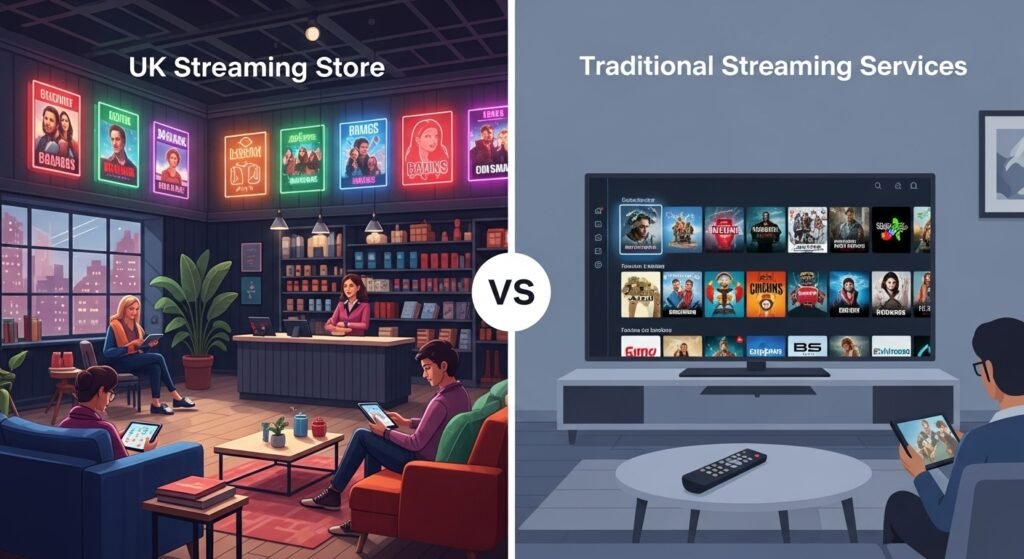
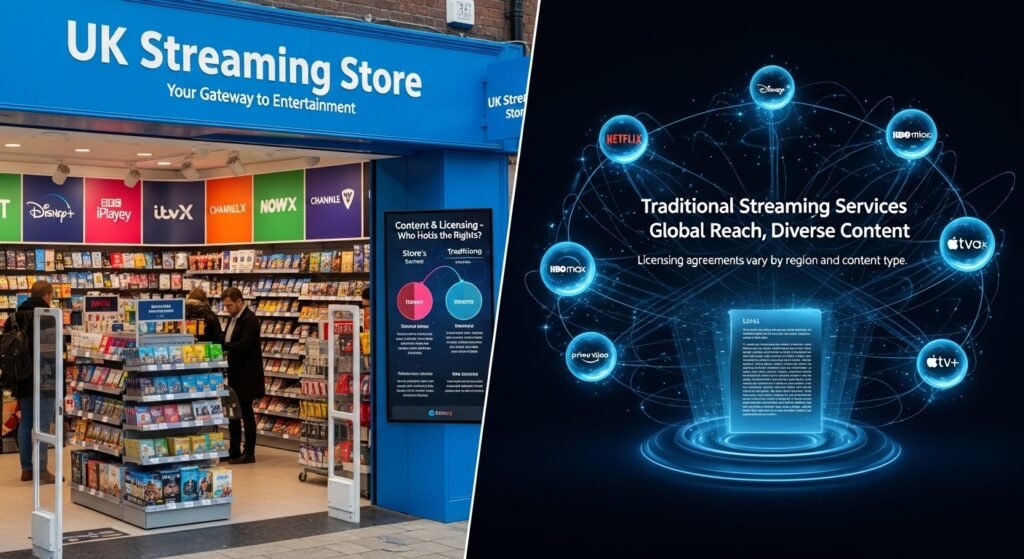
Traditional streaming services: Large platforms distributing licensed, on-demand, or live content through official apps and web players. Examples: Netflix, Amazon Prime Video, Disney+, BBC iPlayer, ITVX. These operate under formal licensing agreements with rights-holders.
-
UK streaming store: A storefront or aggregator focused on UK audiences — may sell or rent films, box sets, or curated subscriptions (e.g., a UK-centric app store, digital cinema distributor, or a curated aggregator that bundles UK channels and VOD).
-
IPTV: “Internet Protocol Television” — a broad term for delivering television content over the internet. IPTV can be entirely legitimate (telco-provided IPTV, licensed OTT IPTV services) or it can be operated by third-party providers selling access to channel lists and VOD streams (some legal, some infringing). Apps such as IPTV Smarters are client players that can load IPTV subscriptions.
2. Content & licensing — who holds the rights?
Traditional streaming services
-
Licensed content: Platforms negotiate rights with studios, networks, and producers. Therefore, content availability is explicitly legal and often tied to territorial windows and time-limited deals.
-
Exclusive originals: Big players invest in originals that are exclusive (Netflix originals, Disney originals). As such, you get stability in catalogue for exclusives.
-
Broad catalogues: Typically include movies, TV series, and sometimes live sport or news through formal partnerships.
UK streaming stores
-
Licensed retail/rental: They sell or rent individual titles that are licensed for the UK market. This can be ideal for niche British content or titles not in global catalogues.
-
Aggregation: Some stores aggregate multiple rights-holders and act as single checkout points for UK content.
IPTV
-
Mixed legality: IPTV can be fully legal when operated by rights-holders or licensed telcos. However, many IPTV providers sell aggregated channel lists (including UK channels) without appropriate licensing.
-
Unclear provenance: When a provider offers nearly every pay-TV channel, live sports, and on-demand catalogues for a suspiciously low price, that’s a red flag. Always validate licensing.
-
Client vs source: Apps like IPTV Smarters Pro are merely clients; they don’t supply streams themselves. The legality depends on the source of the playlist/URLs you load.
Takeaway: Traditional services + reputable UK streaming stores = clear licensing. IPTV requires careful vetting.
3. Cost, trials, and subscription models (including IPTV UK free trial patterns)

Traditional streaming costs
-
Monthly subscriptions with tiered plans (standard/HD/4K, number of simultaneous streams).
-
Bundles: e.g., Prime Video with Amazon Prime, or mobile/ISP bundles offering cheaper access.
-
Free trials: Historically common, but many platforms have reduced trial offers. Trials, when available, are officially sanctioned and tied to major payment methods.
UK streaming stores
-
Transactional (buy/rent) or subscription bundles (e.g., curated UK channels for a flat fee).
-
Transparent pay-per-item pricing. Trials are less common but demonstration previews are typical.
IPTV subscription patterns
-
Low-cost monthly or yearly plans — sometimes priced per device or per stream.
-
Free trials: Many IPTV providers (including those targeting the UK market) offer short free trials (24–72 hours) to demonstrate channel lineups. However, these free trials may be used to entice long-term subscriptions to services that might not be fully licensed.
-
Pricing volatility: Some IPTV providers change URLs and server endpoints. Consequently, their long-term reliability and value are uncertain.
Practical rule: Don’t base decisions solely on price. Consider content legitimacy and reliability. If an IPTV provider offers a too-good-to-be-true package (very low price for premium channels), be cautious.
4. Device support and user experience

Traditional services
-
Official apps across smart TVs, mobile devices, web browsers, game consoles, and streaming sticks (Roku, Fire TV, Apple TV).
-
Consistent UI/UX, parental controls, profiles, and personalization.
-
Regular updates and security patches.
UK streaming stores
-
Often provide web and smart TV apps, and may integrate with platform wallets. UX quality varies by store.
IPTV (including usage with IPTV Smarters Pro / IPTV Smarters)
-
Device flexibility: IPTV streams can be played on a variety of devices (Android boxes, Fire TV, smart TVs, PCs) using client apps like IPTV Smarters Pro, Kodi, or VLC.
-
Configuration: Users typically input an M3U playlist or portal URL. For non-technical users, setup can be confusing.
-
Support: Quality varies drastically. Reputable telco IPTV services offer 24/7 support; third-party IPTV providers often rely on community forums or ticket systems with varying responsiveness.
UX tradeoff: IPTV offers flexibility but often costs in setup complexity and inconsistent playback; traditional services prioritize polish and stability.
5. Reliability, performance, and technical considerations
-
CDNs & scaling: Major streaming platforms use content delivery networks guaranteeing smooth playback and adaptive streaming.
-
IPTV variability: Many IPTV providers rely on smaller servers and unstable sources; buffering, downtime, and broken links are common if the provider is not professionally operated.
-
Device performance: Some IPTV streams use non-adaptive protocols leading to poor quality transitions; mainstream platforms use adaptive bitrate streaming for consistent UX.
6. Legal and safety considerations (UK-specific)
-
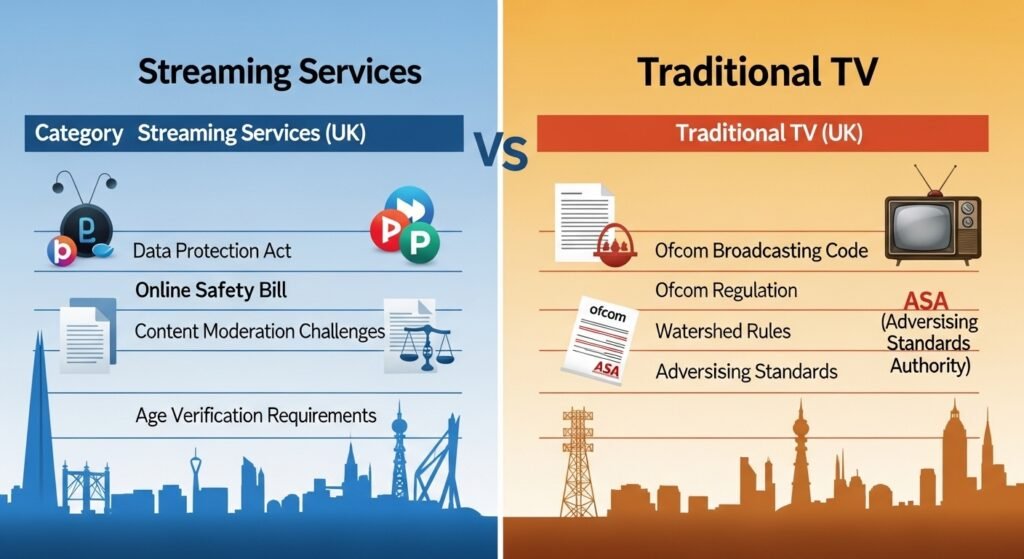
Copyright law: In the UK, accessing or facilitating access to unlicensed content can have legal implications for providers and, in certain contexts, for users. While casual viewers are rarely pursued, knowingly subscribing to pirate IPTV services increases legal and security risk.
-
Security risks: Unofficial IPTV services sometimes distribute malware, use insecure payment mechanisms, or harvest data.
-
Payment methods and refunds: Traditional services have consumer protections (chargebacks, refunds) and adhere to UK consumer law. Many IPTV providers operate offshore and offer fewer protections.
Recommendation: Verify provider legitimacy—check reviews, terms of service, and whether the provider lists licensing partners. Prefer services with UK business registrations and transparent contacts.
7. Use-case buckets — which is best for whom?
-
Mainstream viewers & families — Choose traditional streaming services.
-
Benefits: stable apps, parental controls, reliable libraries.
-
-
Cinephiles wanting niche UK films — Consider UK streaming stores + traditional services.
-
Rationale: stores often carry region-specific titles, classics, and curated British cinema.
-
-
Tech-savvy cord-cutters chasing many live channels — IPTV can be tempting, but vet carefully.
-
If you want a wide mix of channels and you’re comfortable assessing sources, a reputable licensed IPTV or a telco IPTV contract may be a fit. Use clients like IPTV Smarters responsibly with provider credentials.
-
-
Budget-conscious users — Weigh total cost vs risk.
-
Some IPTV subscriptions are cheap, but risks include downtime and potential illegality. Traditional services often offer bundle deals via ISPs and mobile providers.
-
-
Sports fans — Prefer official rights-holders and packages.
-
Live sports rights are tightly controlled. Paying for the official broadcaster/streamer avoids blackouts, shaky feeds, and legal issues.
-
8. Step-by-step explanation of how this comparison was produced (methodology)
Step 1 – Clarifying the scope and keywords:
The first step was to define the scope and purpose of the analysis. The article aimed to compare modern UK streaming platforms with traditional services while incorporating relevant search terms like iptv united kingdom, best iptv uk, and iptv provider to ensure maximum relevance for both readers and search algorithms.
Step 2 – Defining key terms:
It was essential to define “traditional streaming services,” “UK streaming store,” and “IPTV.” These distinctions help readers understand delivery methods, content legality, and target audiences. I also clarified the role of apps such as IPTV Smarters Pro, which act as clients rather than content sources.
Step 3 – Establishing comparison criteria:
Six major comparison areas were chosen—content and licensing, cost and trials, device support and UX, reliability, legal considerations, and audience suitability. These categories cover the main factors a user would weigh before choosing a uk iptv service or iptv subscription.
Step 4 – Using examples and maintaining legality:
Each axis features realistic examples, such as how iptv uk free trial offers work and how traditional platforms license content. I referenced only legitimate IPTV tools to maintain neutrality and legality.
Step 5 – Prioritizing consumer protection and clarity:
The final structure emphasizes legality, readability, and ethical guidance, helping readers verify licensing, ensure safe iptv subscriptions, and choose reliable, lawful alternatives among the best IPTV UK options available.
9. Conclusion and practical takeaways
In short, traditional streaming services and reputable UK streaming stores are the safest and most reliable routes for UK viewers: licensed content, consistent UX, consumer protections, and predictable performance. IPTV lives in a grey area: it includes legitimate telco and licensed offerings, but many third-party IPTV providers operate without proper rights and deliver unstable services. If you decide to explore IPTV (for example to evaluate an iptv subscription or to test an iptv uk free trial), do so cautiously: verify the provider’s licensing claims, prefer well-reviewed services, avoid suspectly low prices for premium channel bundles, and remember that client apps like IPTV Smarters Pro are neutral tools — not content vendors.